Intestinal Biopsy - The Ongoing Discussion

When it comes to discussing intestinal biopsies, the same question seems to be asked over and over again:  "Do I need full thickness or partial thickness biopsies to get a diagnosis"?  While working in general practice I asked this question of many Pathologists and Internists.  The answer was as variable as the personalities the question was being posed to.  At times the opinion would be that full thickness biopsies were really the only way to confidently differentiate between diseases that can look similar (think Inflammatory Bowel Disease vs. Lymphoma).  Just as quickly as that seemed to be "gospel", the opinions would change and partial thickness biopsies were now the best (and least invasive) option.  So the question remains - what's better?  While it is important to remember that I am a general practitioner and not a specialist, I feel it is still valid for me to present the most logical approach I take when veterinarians call me asking for biopsies.


First of all, I think it is important to appreciate that obtaining biopsy samples (in general) is best done in the least invasive way possible.  A faster, less painful recovery is obviously better for the animal in question, but will also help the pet owner more readily accept the treatment recommendations.  When a veterinarian calls me asking for intestinal biopsies, I explain the 2 methods I can use to help:


  1. Flexible endoscopy involves passing a long flexible scope along the gastrointestinal tract in order to visualize from within.  This scope can be passed through the mouth, down the throat and into the stomach and first part of the small intestine.  Conversely, it can also be passed into the colon and up through the large intestine and (in some cases) into the last portion of the small intestine.  When performing flexible endoscopy the biopsy samples are collected with a long biopsy forceps that is passed through the scope.  These samples are called "partial thickness" because they only sample the innermost layers of the wall of the intestine.
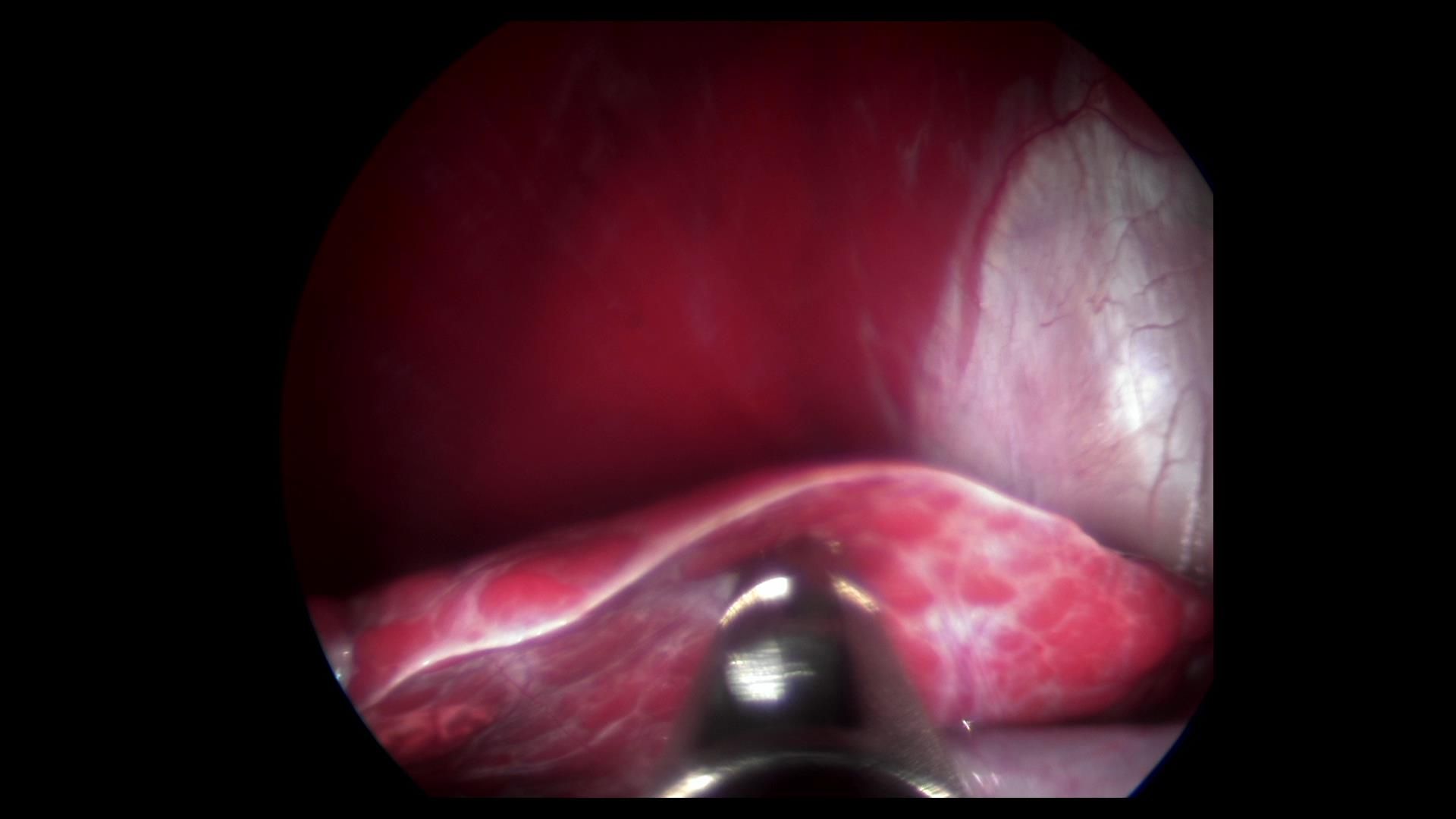
  2. Rigid endoscopy:  By contrast, "full thickness" biopsies can be collected by taking samples that demonstrate all of the layers of the intestinal wall.  In order to collect these samples in a minimally invasive way, a small incision is made into the abdomen and laparoscopy is performed.  The intestine is grasped and brought through a small incision to allow sample collection and sutures (stitches) to be placed into the intestine to repair the defect left after the biopsy.  In the past, collecting full thickness biopsies would require a larger abdominal incision and many pet owners were hesitant to put their per through this.  With the use of laparoscopy, the abdominal incision is much smaller allowing for faster recovery. 


So Which Is Better?


A general agreement seems to be that both full thickness and partial thickness biopsies are useful in diagnosing the majority of gastrointestinal diseases found in dogs and cats.  The quality of the biopsy samples has (and always will be) the most important aspect of achieving a reliable diagnosis.  However, in my opinion the decision to perform full thickness vs. partial thickness biopsies varies depending on the animal and the suspected disease.  If a full representation of the small intestine is required (or wanted by the veterinarian), it can often make more sense to collect full thickness biopsies via laparoscopy.  Flexible endoscopy is no doubt less invasive in comparison, but is also limited in how far into the small intestine the scope can be passed (thereby providing no guarantee of jejunum samples).  In order to obtain samples from the Ileum (last segment of the small intestine) a colonoscopy must be performed (due to the extraordinary length of the small intestine).  While this is certainly possible, it can be difficult to access all areas of the small intestine in smaller dogs and some cats.  In addition, colonoscopy requires considerable patient preparation before performing the procedure (cleaning out the colon, etc.).


BOTTOM LINE


When performed using minimally invasive techniques, both full thickness and partial thickness biopsies can be extremely helpful in obtaining a diagnosis.  The choice between technique is best tailored to the individual patient and expectations and/or requirements of the clinician responsible for the case.  Understanding the pros and cons of each approach can help ensure that our patients receive the care they need with the least amount of discomfort possible. 


I am always happy to discuss potential cases with veterinarians to help determine the best approach.  Please feel free to contact me.

Recent Posts

Endoscopic view of a large, yellow gallstone lodged in a bile duct.
March 11, 2026
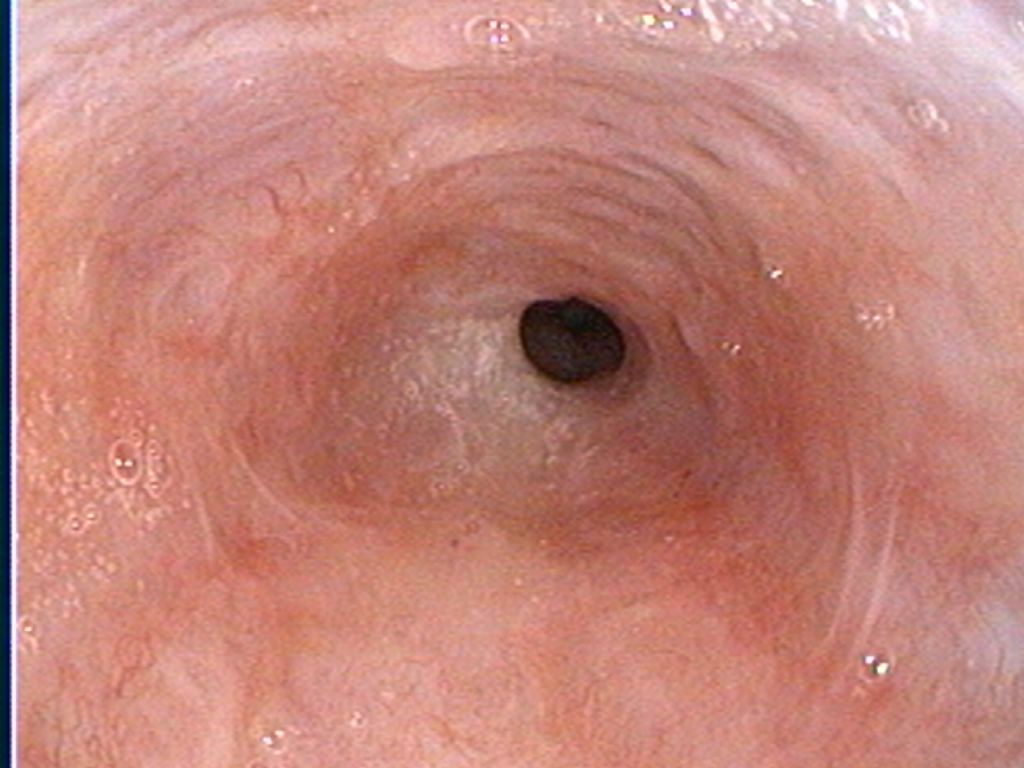
In their never ending quest to amaze pet owners and veterinarians, dogs (and sometimes cats) are always demonstrating how many things they consider "edible". While food products such as bones and corn cobs can be understood, less tempting items such as underpants, toys, stuffed animals, shoes and jewelry tend to make us scratch our heads. Most of these items will make their way down the esophagus into the stomach, and occasionally will pass through their digestive system without any major problems. However, quite often these items will become lodged somewhere and require treatment to be removed (eg: endoscopy to pull it out of the stomach or general surgery if further into the small intestine). On rare occasions a foreign object will become lodged in the esophagus and cause the pet great discomfort. Over the past while I have been asked to remove a few esophageal foreign bodies and these are never pleasant or easy to do. Objects that become lodged in the esophagus are typically larger and more firm in nature, making it harder for the pet to swallow down to the stomach. Once the object becomes stuck it can be difficult to dislodge and swift treatment is the best chance for preventing more serious secondary trauma. In particular, animals with esophageal foreign bodies are at a risk of pressure ulcerations forming in the esophagus (where the foreign material is tightly wedged). The esophagus is not able to distend like a stomach would and pressure sores (ulcers) can start to form fairly quickly. Should the foreign material be successfully removed, the esophagus begins to repair itself and scar tissue can form. If a large amount of scar tissue forms in an area there is a risk of stricture (shrinking down or narrowing of the opening in the esophagus). In extreme cases these strictures can cause the esophagus to become so narrow that food cannot get through. When this happens the process for opening that narrowed spot back up can be time consuming, uncomfortable for the pet, and expensive. In many cases, signs of an esophageal foreign body can be difficulty swallowing, repeated swallowing motions despite not currently eating anything, drooling, regurgitation when trying to eat, and even difficulty breathing if the object is putting pressure on the trachea (airway). BOTTOM LINE: If you think your pet has an object stuck in their throat, don't wait! The sooner you can get to a veterinarian to investigate the better. Case #1: 5 year old small breed dog that was eating a dental chew and swallowed a large piece that became lodged in the esophagus. She was not experiencing any respiratory issues and was stable, so the esophagoscopy was performed later that day. The foreign object was removed leaving a mild to moderate amount of inflammation to the tissue (seen as small red depressions on the lower left image. This little girl made a full recovery. Case #2: 10 year old small breed dog with history of regurgitation for a number of days prior to presentation to his veterinarian. Radiographs showed a large amount of foreign material in the esophagus and esophagoscopy was performed to attempt to remove the obstruction. During an extremely difficult procedure we removed multiple pieces of a small plastic toy combined with a large amount of hair. The esophagus was extremely ulcerated and we were concerned about a secondary stricture formation. Despite aggressive therapy a severe stricture did form and ultimately humane euthanasia was elected. While unfortunate, this serves to demonstrate the importance of recognizing a problem and treating it as quickly as possible.
Endoscopic view of a deep red organ, possibly the liver, with a silver surgical tool at the bottom.
March 11, 2026
At some point or another the chances are that your veterinarian has recommended running "wellness" bloodwork on your pet during a visit. While many people appreciate the benefit of wellness testing, there is still some confusion as to what it is and why we (as veterinarians) recommend it. Quite often, the question we'r
Endoscopic view inside the esophagus, showing a dark, round opening at the center surrounded by pink tissue.
March 11, 2026
It's happened to all of us - we're in the middle of a surgery and our technician tells us that the patient is regurgitating. While we continue to operate, our techs quickly clean out the mouth and double check to ensure the endotracheal cuff is snug. Now what? There are a variety of ways to address an obvious regurgita